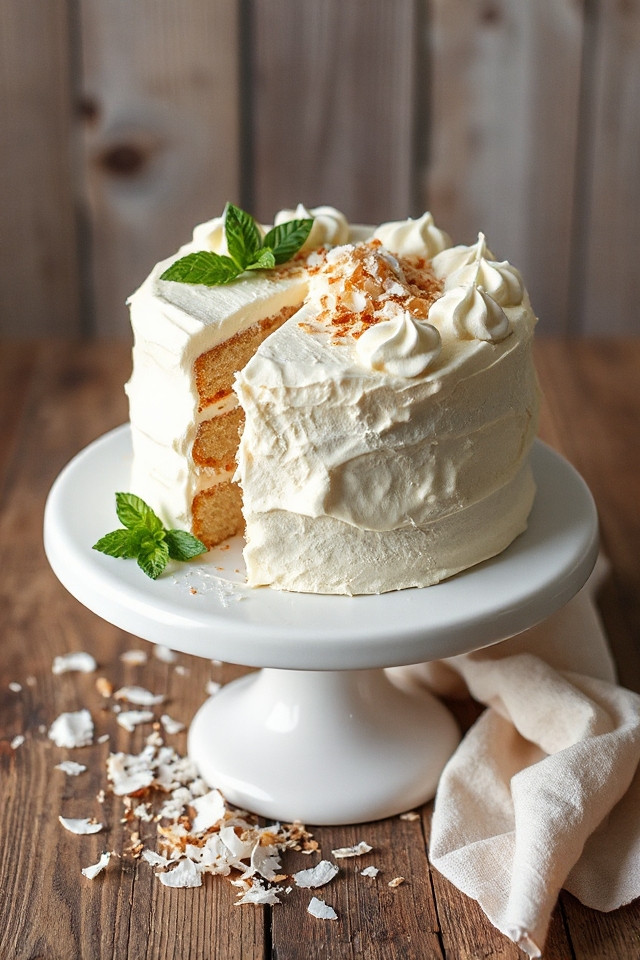
Why You’ll Love this Coconut Cake Recipe
If you’re a coconut lover like me, you’re going to adore this Coconut Cake recipe. It’s moist, fluffy, and packed with that delightful coconut flavor that makes every bite a tropical escape.
The texture is simply heavenly, and the sweetness strikes the perfect balance. I love how easy it’s to whip up, making it perfect for any occasion.
Plus, it’s a crowd-pleaser! Every time I serve it, I see smiles all around. Trust me, once you try this cake, you’ll want to make it again and again.
It’s a treat that brings a slice of paradise to your table!
Ingredients of Coconut Cake
When it comes to baking a delicious Coconut Cake, the ingredients play an essential role in crafting that perfect blend of flavors and textures. This cake is a wonderful medley of sweet, creamy coconut and a fluffy, moist crumb that’ll make your taste buds dance.
The best part? Most of the ingredients are pantry staples, so you probably have a good portion of them on hand already. Let’s check out what you’ll need to whip up this tropical delight.
Ingredients for Coconut Cake:
- 3 cups sugar
- 3/4 cup shortening
- 4 eggs
- 3/4 cup coconut (shredded or flaked, your choice)
- 4 1/2 cups flour
- 4 1/2 teaspoons baking powder
- 3/4 teaspoon salt
- 1 1/2 cups milk
- 1 1/2 teaspoons vanilla extract
Now, before you dash off to grab your ingredients, let’s talk about a few considerations.
First, the type of coconut you use can really change the game. If you love that chewy texture, go for shredded coconut; if you prefer a more delicate bite, flaked coconut might be your best bet.
Also, make sure your eggs and milk are at room temperature before you start mixing. It really helps everything blend together nicely and creates that fluffy cake we all dream about.
And if you’re feeling adventurous, you might even want to throw in a sprinkle of coconut extract for an extra punch of flavor.
How to Make Coconut Cake
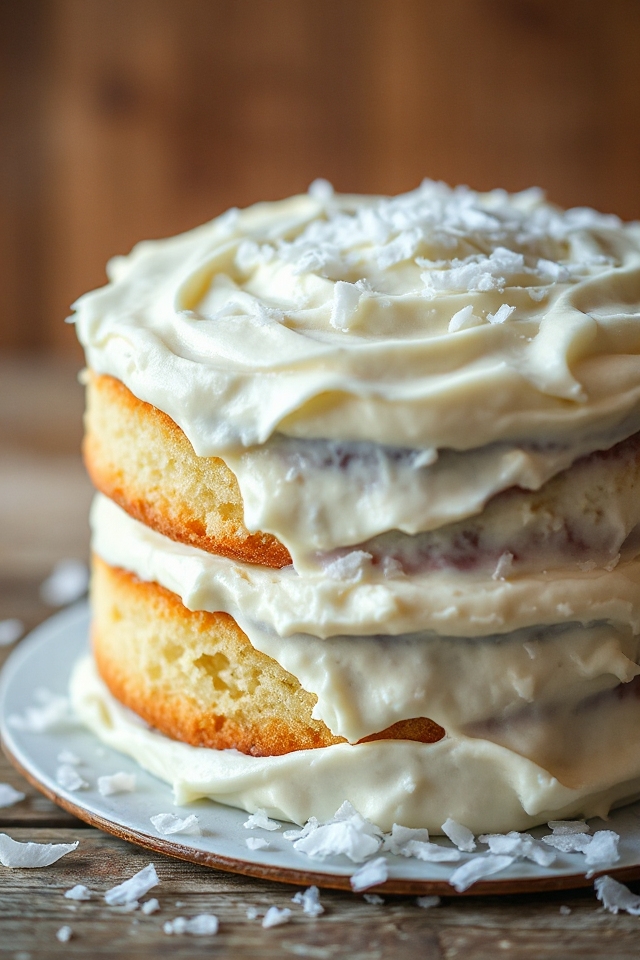
Alright, let’s plunge into the delicious world of Coconut Cake making. First things first, you’ll want to grab your mixing bowl because we’re about to create some magic. Start by creaming together 3 cups of sugar and 3/4 cup of shortening until it’s fluffy—think cloud-like softness. I always find this part oddly satisfying, like I’m a baker in a fancy pastry shop.
Once you’ve got that fluffy texture, it’s time to bring in the eggs. Add 4 eggs, one at a time, mixing well after each addition. Trust me, this step is essential for that light and airy cake you’re dreaming of. After the eggs are in, stir in 3/4 cup of coconut. The smell alone will get you excited.
Next up, let’s tackle those dry ingredients. In a separate bowl, sift together 4 1/2 cups of flour, 4 1/2 teaspoons of baking powder, and 3/4 teaspoon of salt. This might feel like a chore, but sifting helps eliminate lumps and makes for an even better cake—so don’t skip it, okay?
Now, here comes the fun part: you’ll want to add the dry mixture to your sugar/shortening/egg blend alternately with 1 1/2 cups of milk and 1 1/2 teaspoons of vanilla extract. Start and finish with the dry ingredients. Mixing this all together is like a dance—steady and rhythmic; just make sure not to overdo it.
Once you’ve got a lovely batter, divide it evenly into 2 greased and lightly floured 9-inch cake pans.
Now, it’s time to bake. Pop those pans into a preheated oven at 350 degrees for about 30 to 35 minutes. This is the part where the anticipation gets real. You’ll want to keep an eye on them, and when a toothpick comes out clean, you know you’ve done it right.
Let them cool a bit before you flip them out onto a wire rack. And remember, patience is key. The aroma wafting through your kitchen might make you want to plunge right in, but giving them a little time to cool will help with slicing and serving. Plus, it gives you time to clean up the flour explosion that surely just happened in your kitchen—ah, the joy of baking!
Coconut Cake Substitutions & Variations
While I love the classic coconut cake recipe, experimenting with substitutions and variations can lead to delightful new twists.
For a gluten-free option, I’ve swapped flour with almond or coconut flour, adjusting the liquid slightly. If you’re feeling adventurous, adding pineapple or lime zest can brighten the flavors.
I’ve even used coconut milk instead of regular milk for a richer taste. For a decadent touch, try incorporating white chocolate chips into the batter.
You can also play with different frostings, like a tangy cream cheese or a chocolate ganache, to elevate the cake even further. The possibilities are endless!
What to Serve with Coconut Cake
If you’re wondering what to serve with coconut cake, consider pairing it with a revitalizing tropical twist.
I love to complement my coconut cake with a rejuvenating fruit salad, featuring mangoes, pineapples, and kiwi. The bright flavors enhance the cake’s sweetness beautifully.
Another delicious option is a scoop of coconut sorbet or vanilla ice cream, which adds a creamy contrast.
For beverages, a chilled glass of iced tea or a fruity punch works wonders. You might even try a coconut-infused cocktail for an extra splash of fun!
These pairings elevate the coconut cake experience to a whole new level. Enjoy!
Additional Tips & Notes
To guarantee your coconut cake turns out perfectly, I recommend a few additional tips.
First, make certain your ingredients are at room temperature; this helps create a smoother batter.
When measuring flour, spoon it into your measuring cup and level it off to avoid packing.
For an extra coconut kick, use unsweetened shredded coconut in the batter.
Don’t skip greasing and flouring your cake pans; it’ll prevent sticking.
Finally, let the cake cool completely before frosting it to avoid melting your creamy frosting.
Trust me, these small steps guarantee a moist, delicious coconut cake every time!